
Test Engineering Co-Op | Sub-Zero Group, Inc., Fitchburg, WI | January – August 2025 Visit Sub-Zero Group →
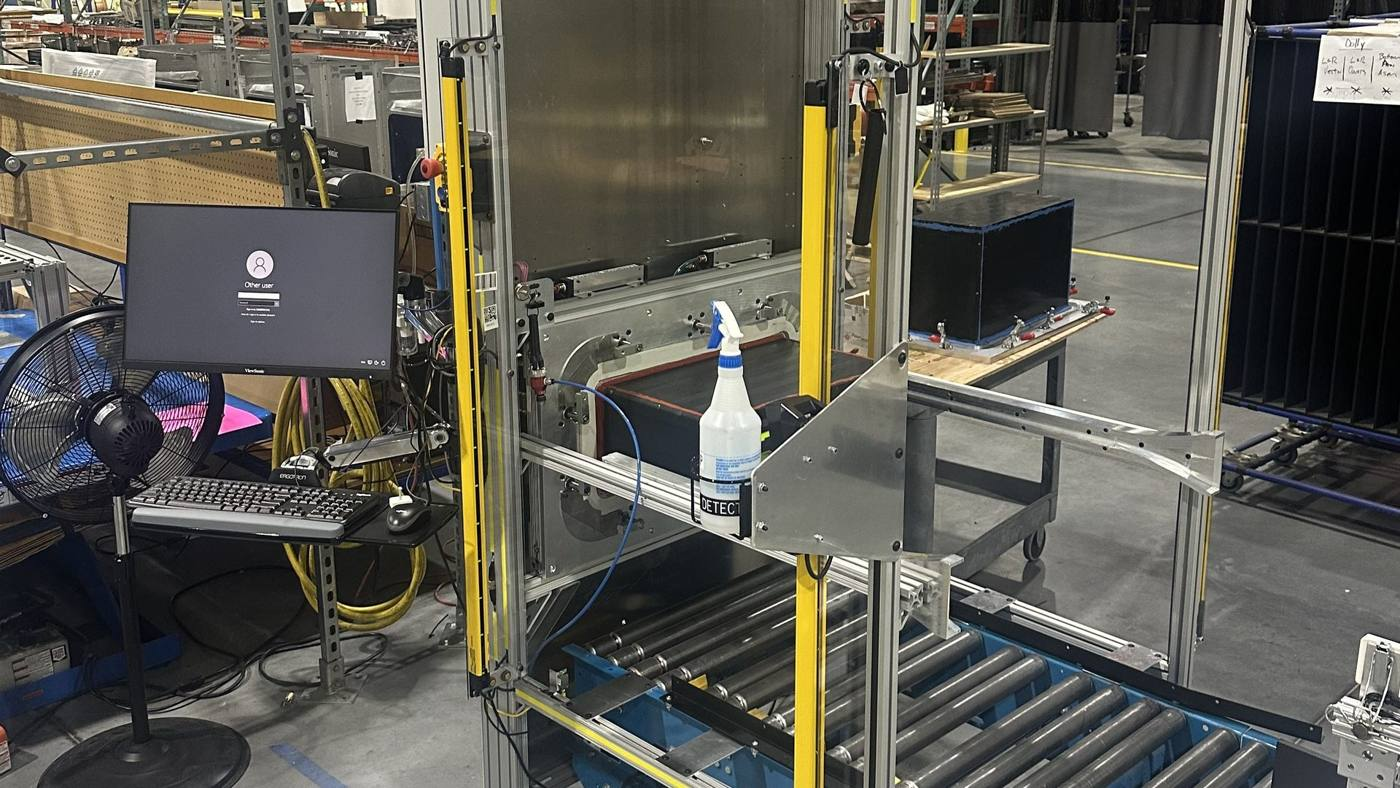
Sub-Zero Group, based in Madison, Wisconsin, makes Sub-Zero, Wolf, and Cove kitchen appliances. As a co-op on the test engineering team, I designed, built, and wired the equipment that leak-tests steam cavities and condenser trays in production, from a full automated test station down to the hand tools operators use to seal parts for each test.
$200K+
automated in-line leak test station
12
steam cavities tested per hour
90%
lower cost on specialty gaskets
Automated In-Line Cavity Leak Test Station
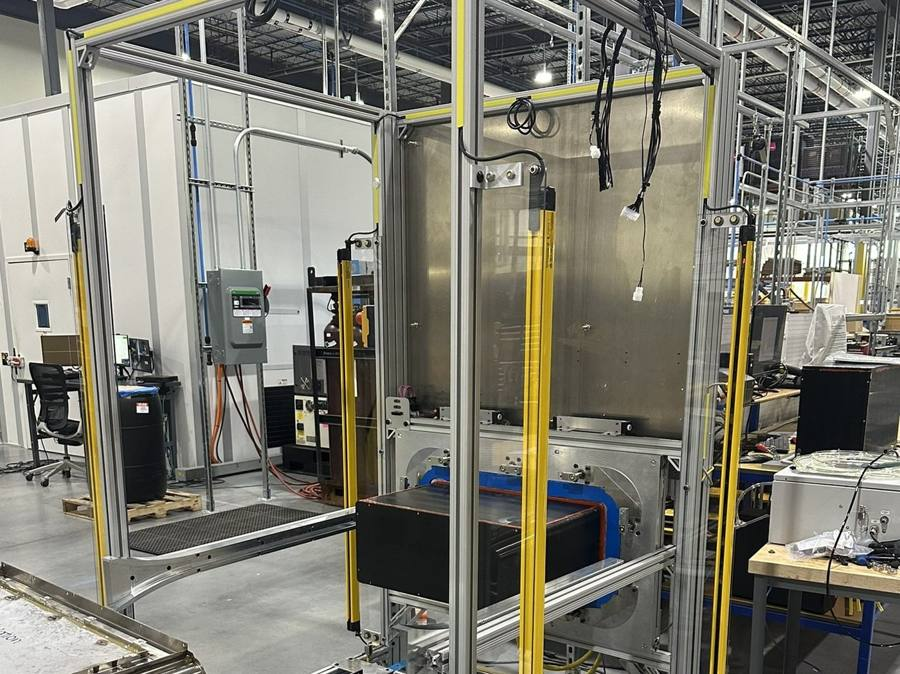
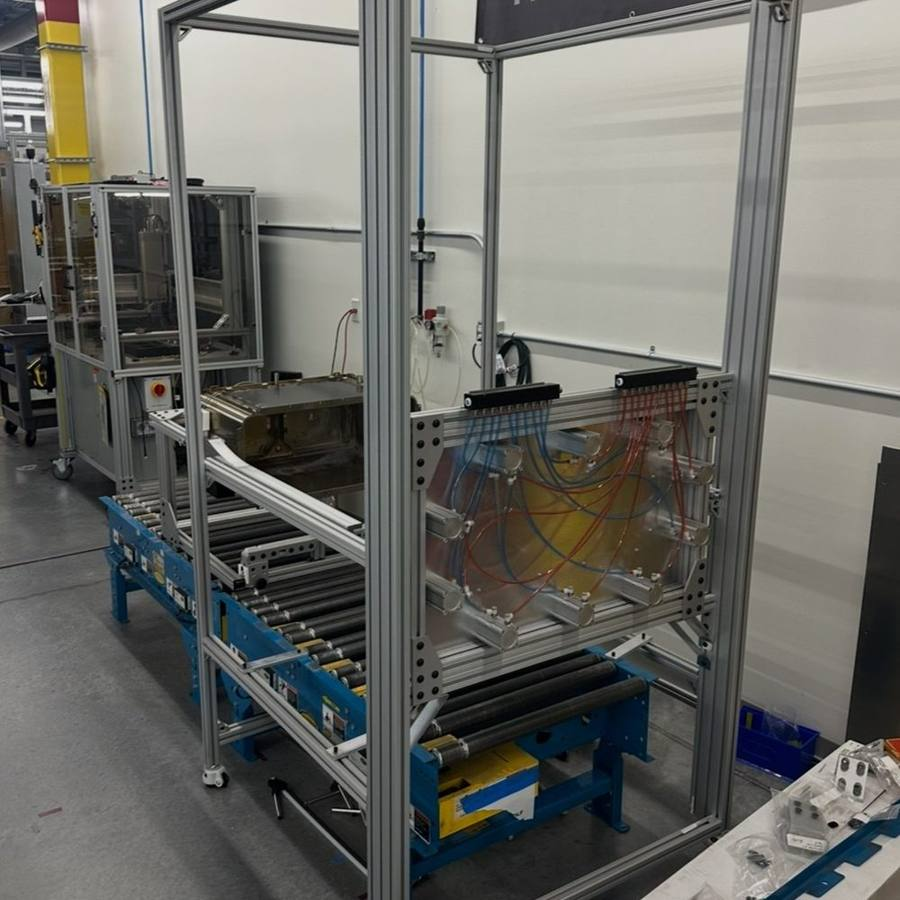
- Designed and built a $200K+ automated in-line leak test station using SolidWorks and LabVIEW that tests steam cavities right on the production conveyor
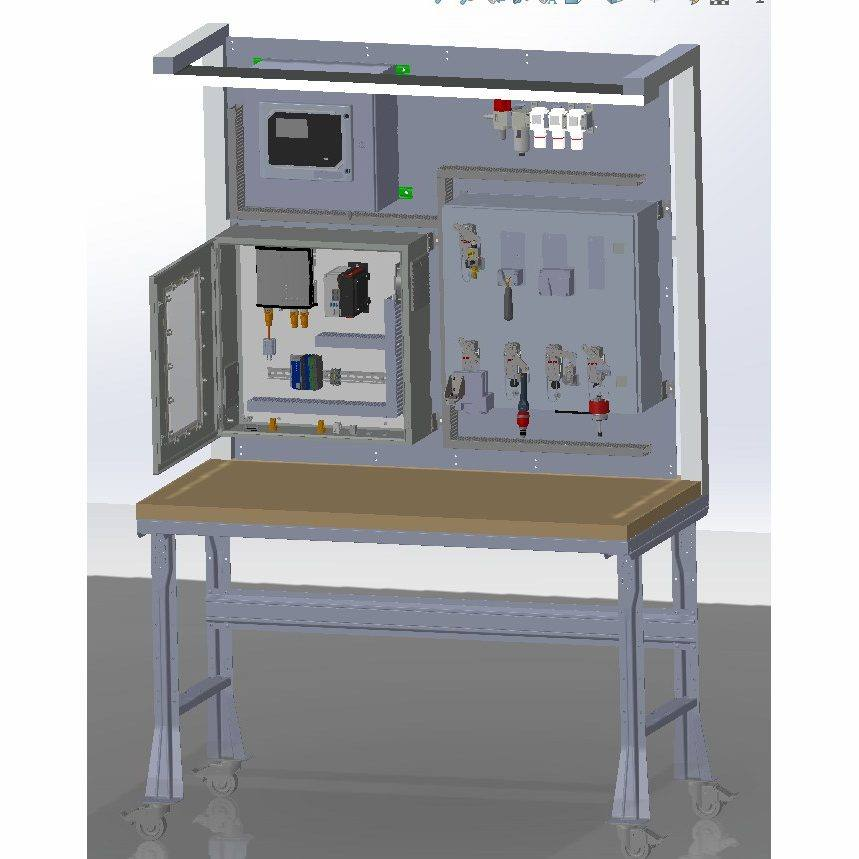
- Framed the station in 80/20 aluminum extrusion, with safety light curtains across the operator openings
- Validated a throughput of 12 steam cavities per hour through production test runs and data analysis
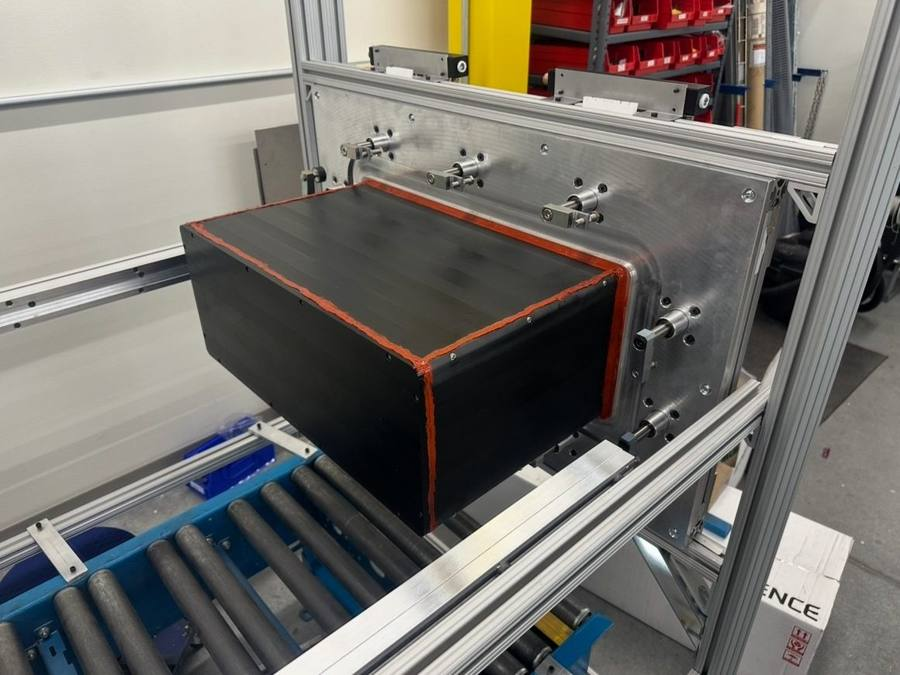
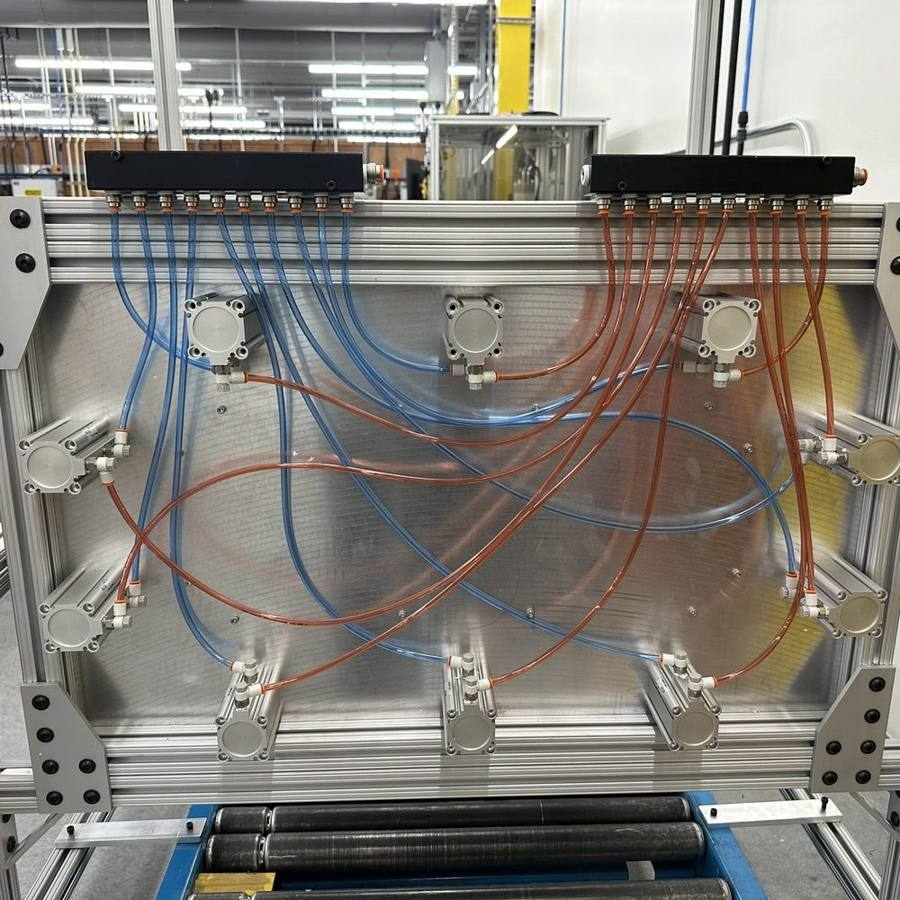
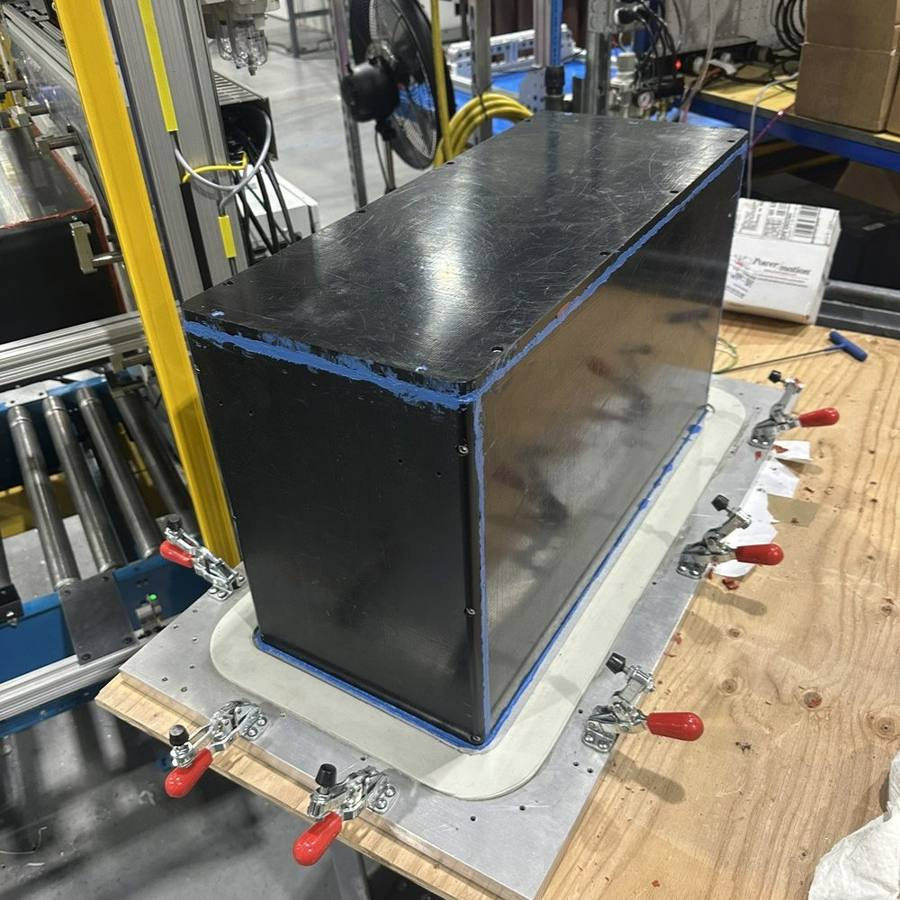
- Designed and built a volume filler that takes up empty air space inside the cavity during the test, held in place by pneumatic swing clamps
- When a longer RTD temperature sensor was added, cut the filler down on a table saw and resealed it with a cheaper sealant that goes on with a caulk gun
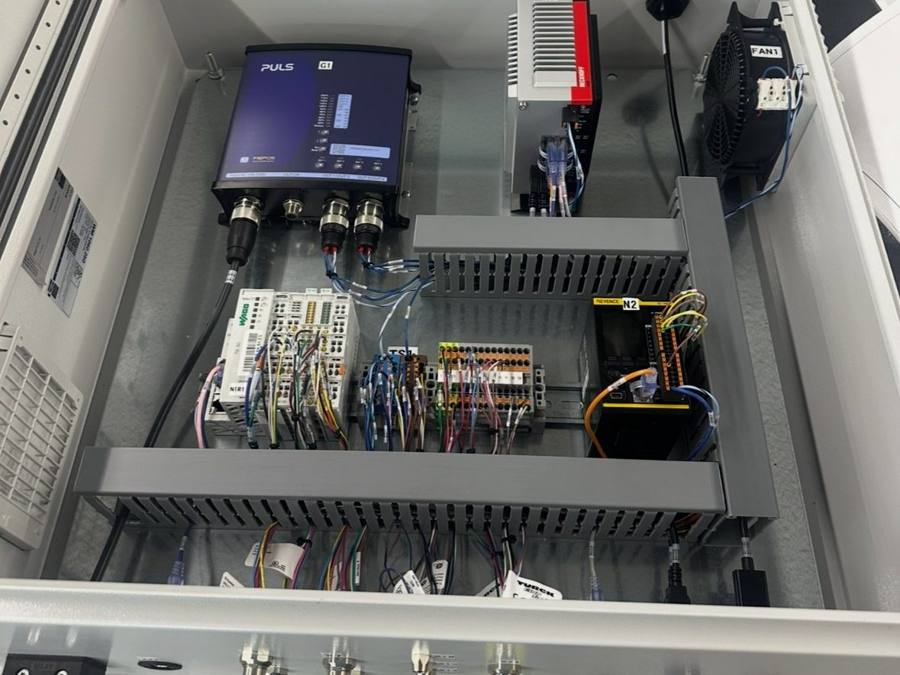
- Wired the station’s $100,000 low-voltage controls box from electrical and pneumatic schematics
- Wired the e‑stops and safety light curtains that protect operators working at the station
Condenser Tray Seal Tools & Sensor Hangers
A new condenser tray test station needed a way to seal the tray’s small, awkward openings before each test. I designed the operator seal tools that close them off and the hangers that hold each tool between tests.
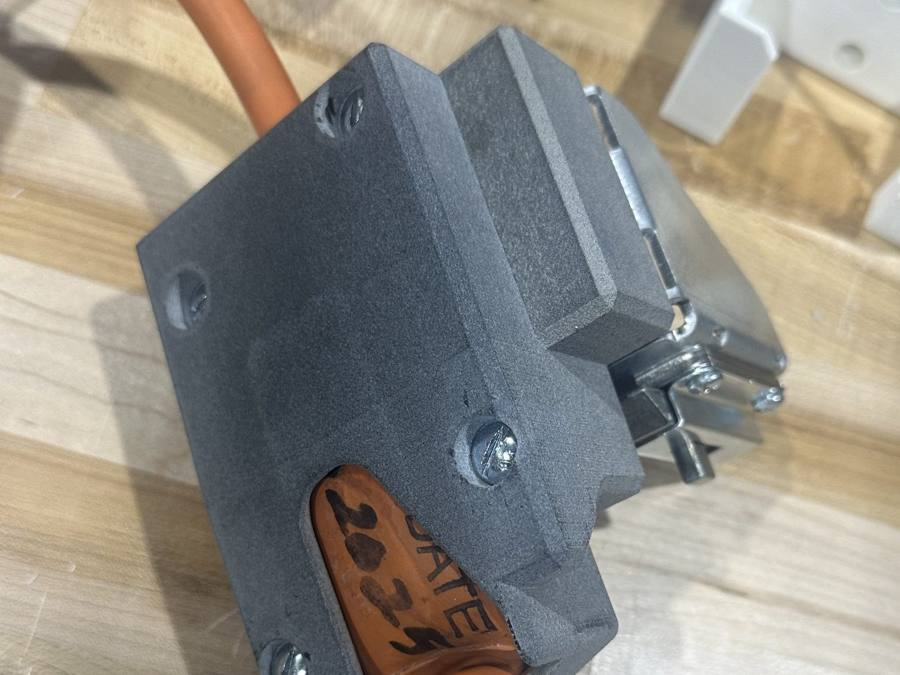
- Balloon seal tool: an inflatable bladder that seals the tray’s vent and drain, which sit in a tiny, confined space
- Retained with a slam latch, with a loop clamp for strain relief on the air line
- Dowel-pinned 3D-printed body with heat-set inserts, since threads tapped straight into plastic creep over time
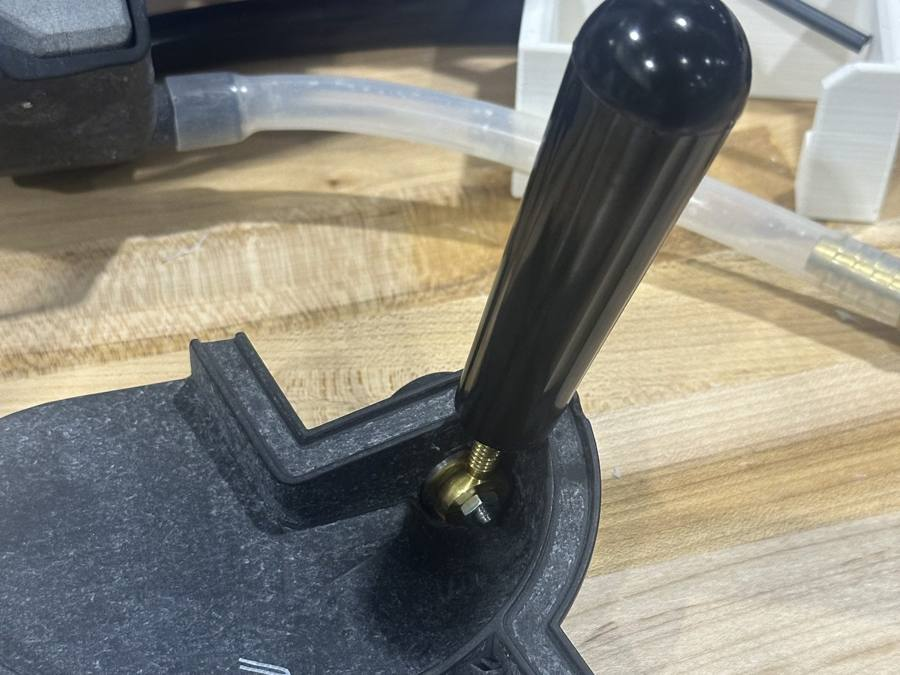
- Swoosh seal tool: seals the tray’s damper, where there was no room for an off-the-shelf seal
- Designed a machined groove for an unloaded U-cup seal that slides in easily and seals under vacuum
- Detailed the A2 tool steel seal shoulders to tolerances as tight as ±0.0005 in. for manual-mill machining, dowel-pinned for repeatable alignment
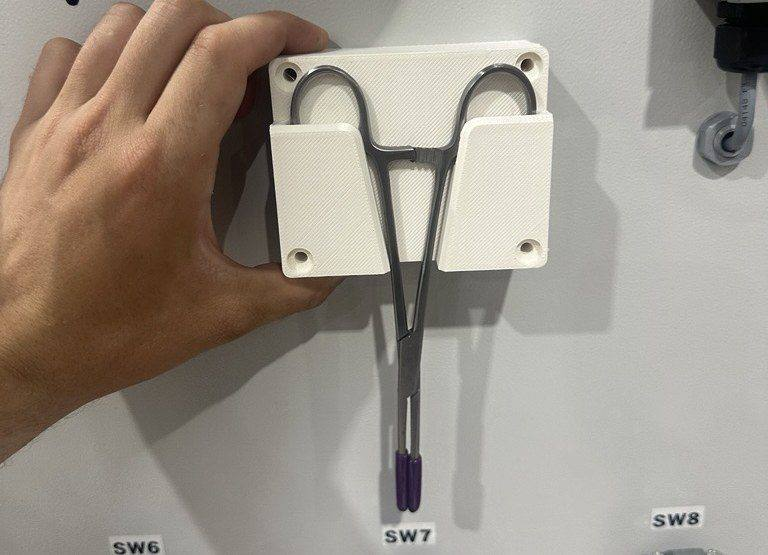
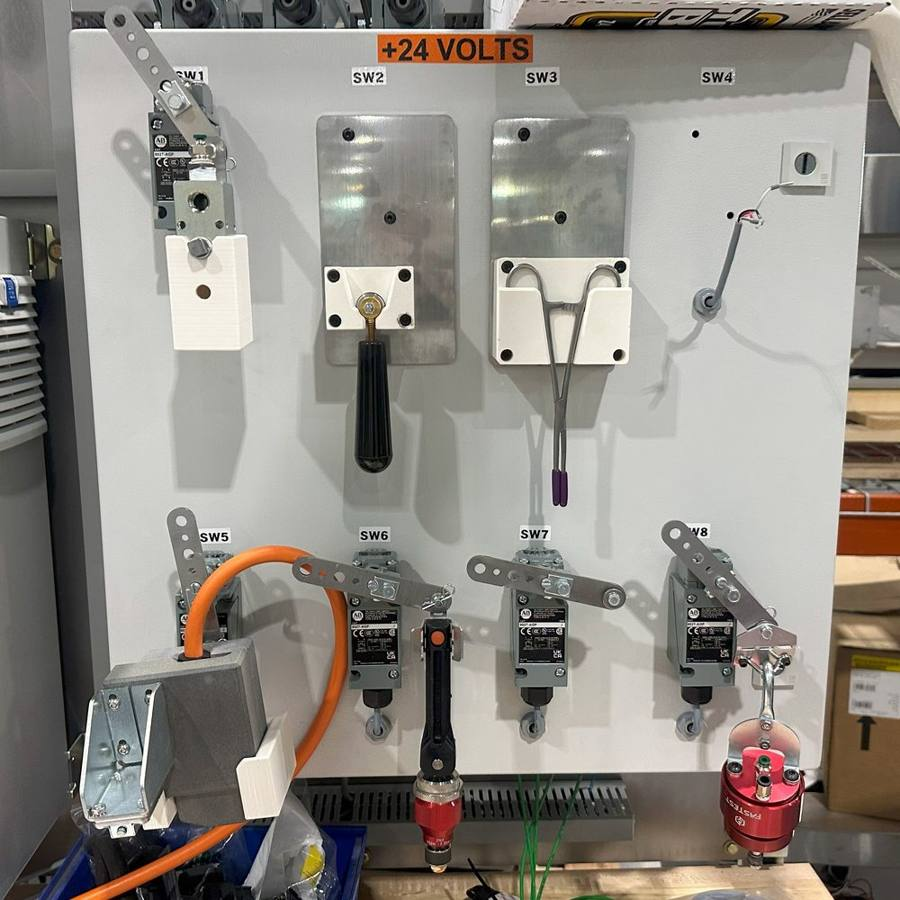
- Designed 3D-printed hangers with inductive proximity sensors that detect when the hemostat and swoosh tools are docked
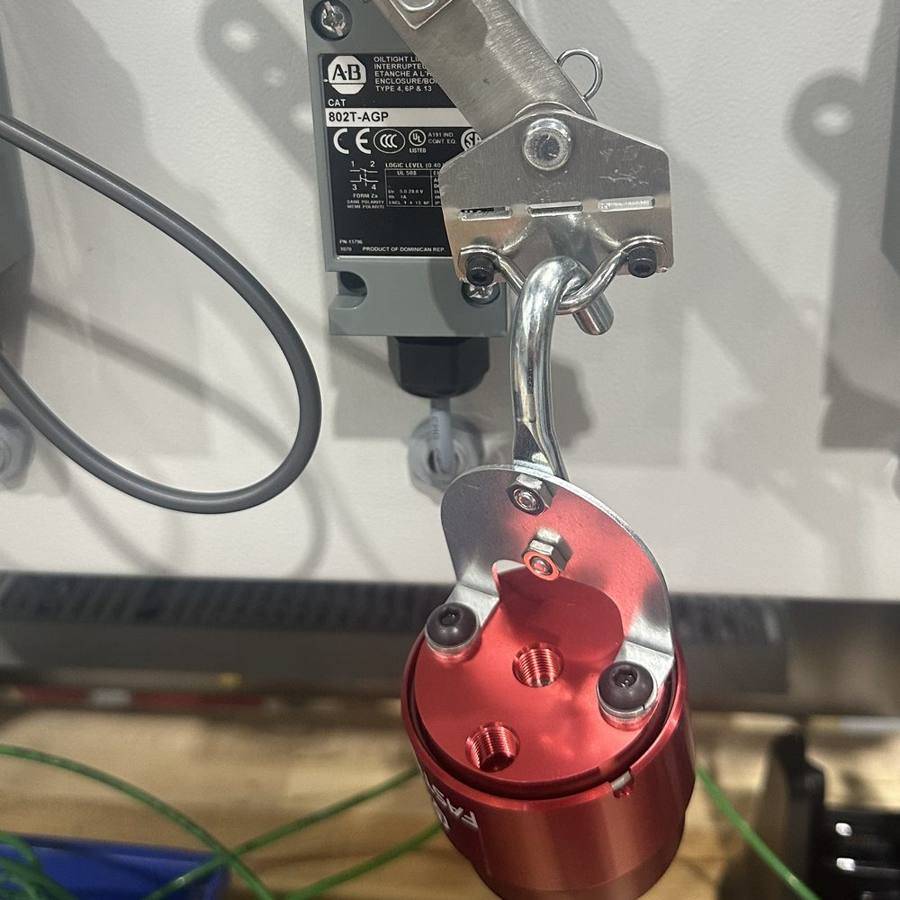
- Added hangers for the station’s FasTest leak-test connectors, which use limit switches to confirm each connector is in place
Foam Gasket Retainer & Supplier Sourcing
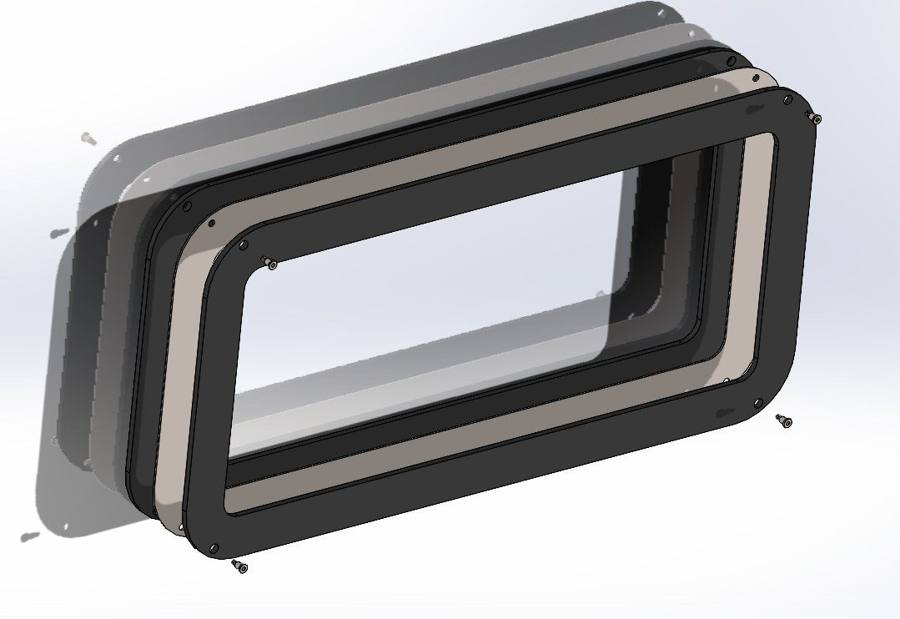
- Designed a retention system for a soft foam/rubber gasket: a sheet metal retainer sandwiched between layers of adhesive-backed foam
- Removed the need for a machined gasket groove, cutting cost, and made the design usable on both the back panel tester and the cavity leak tester
- Worked with a foam supplier to source the specialty gaskets at 90% lower cost than stock alternatives
Thermal Imaging Leak Feasibility Study
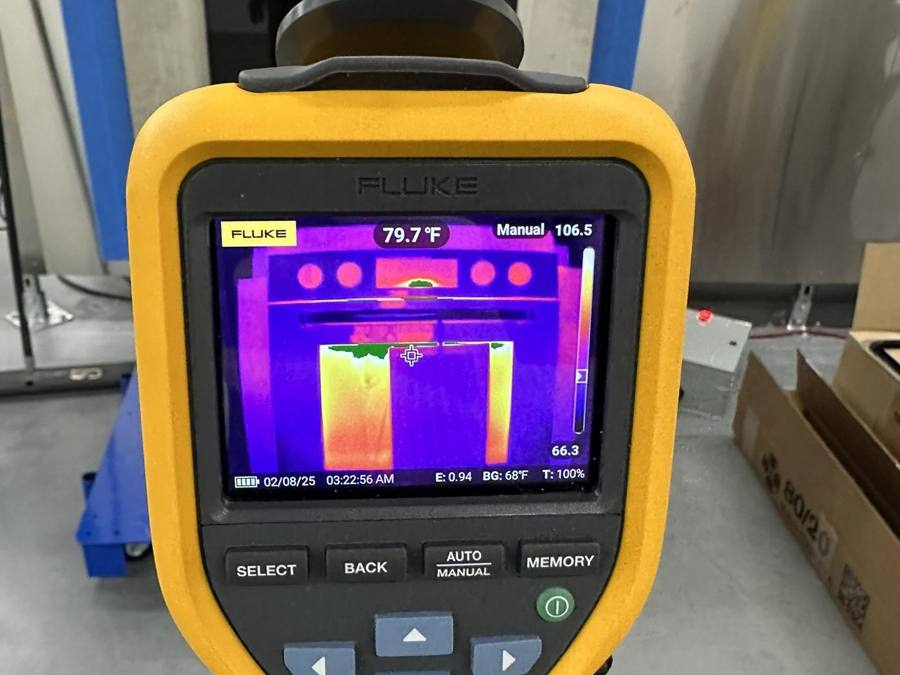
- Tested whether a thermal camera could spot steam escaping past an oven’s cavity door seal, a leak that can damage customer cabinetry
- Characterized how emissivity and heat saturation affected the camera’s readings on the door
- Authored a feasibility report recommending AI comparison of condensation photos as the more viable detection method
Takeaways
- Sealing isn’t as easy as it seems. Every seal on this page needed a different answer: a bladder, a U-cup, a foam gasket.
- Never stop learning.
- Do things right the first time. Measure twice, cut once.
- Good file management saves real time. Working in assemblies of 460+ components showed me why revision control, BOMs, and searchable files in a PDM vault matter.
Tools & Skills
SolidWorks, LabVIEW, 80/20 aluminum framing, pneumatics, electrical & pneumatic schematics, control panel wiring, machine guarding (e‑stops, light curtains), inductive sensors & limit switches, seal design (bladders, U-cups, foam gaskets), 3D printing with heat-set inserts, tight-tolerance drawings, thermal imaging, supplier coordination, technical writing.